
Cash Balance Pension Plan: Overview, Pros and Cons
What Is a Cash Balance Pension Plan?
A cash balance pension plan is a type of defined-benefit pension plan that offers a lifetime annuity option. In this plan, the employer credits a participant’s account with a set percentage of their yearly compensation, plus interest charges. The funding limits, requirements, and investment risks are aligned with defined-benefit standards. Unlike defined-contribution plans, changes in the portfolio do not affect the final benefits upon retirement or termination. The company assumes all risks and bears the ownership of any profits or losses in the portfolio.

Understanding Cash Balance Pension Plans
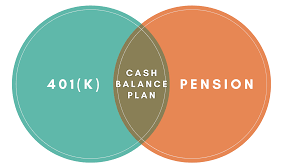
A cash balance plan (CBP) is a defined-benefit pension plan that operates on an individual account basis, similar to a defined contribution plan. While it shares some features with 401(k) plans, such as professional management of investments, the key difference is that participants are promised a specific benefit at retirement, expressed in terms of an account balance rather than a monthly income stream.
For example, an employee in a cash balance plan might receive a 5% salary credit and a 5% interest credit. If the employee earns $100,000 annually, their account would receive a $5,000 pay credit, plus 5% interest on the balance. As the employee remains with the employer, the account balance grows, ultimately providing the retirement benefit. Upon retirement, the employee can choose between a lump sum or a monthly annuity payment.
Cash Balance Pension Plan vs. Traditional Pension Plan
The most significant difference between a cash balance pension and a traditional pension plan lies in how the benefits are calculated:
Traditional pension plans generally determine your monthly benefit based on the highest few years of your compensation, often using a formula involving salary and years of service.
In contrast, a cash balance pension plan bases your retirement benefit on the total number of years you’ve worked with the company, with annual pay credits and interest credits added to your account. This provides more clarity for employees, as the benefit grows with each year of service, regardless of fluctuating salary.

Cash Balance Pension Plan vs. 401(k)
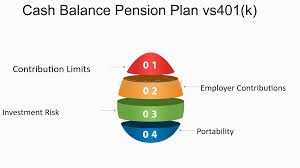
The most significant difference between a cash balance pension (CBP) and a 401(k) plan lies in investment risk and how retirement benefits are guaranteed:
Cash balance pension plans (CBP): The employer bears the investment risk, meaning they are responsible for ensuring the employee receives the promised benefit, regardless of market fluctuations. The employer guarantees a specific retirement benefit, which is calculated through annual pay and interest credits.
401(k) plans: In contrast, the employee bears the investment risk. The employee chooses how to invest the funds in their 401(k), and the account balance depends on the performance of those investments. The employer does not guarantee any specific retirement benefit.
Pros and Cons of a Cash Balance Pension Plan
While this type of plan has several benefits, there are some disadvantages to consider.
Pros:
- Lump sum payouts
- Rollover options
- Tax-deferred
- Custom contribution limit
Cons:
- Taxable distributions
- High cost to maintain
- No employee contributions
Pros Explained
Here’s a breakdown of key benefits and features of a cash balance pension plan:
Lump Sum Payouts: A cash balance pension plan offers a lump sum payout option, which can be advantageous for those who prefer to manage their capital by investing in traditional preservation instruments like government bonds or money market funds.
Rollover Options: If you choose a lump sum payout, you can easily roll it over into an IRA or another qualified pension plan, preserving the tax advantages.
Tax-Deferred Contributions: The contributions to a cash balance pension plan are tax-deferred, meaning you don’t pay taxes on the contributions until you withdraw or take a lump sum payout. This is beneficial if you’re in a higher tax bracket when contributing, and lower when making withdrawals, potentially saving on income tax.
Custom Contribution Limits: Unlike 401(k)s or IRAs, a cash balance pension plan has custom contribution limits based on factors like your income, age, and the target date and balance of the fund. This gives the plan more flexibility in how much you can contribute compared to standard retirement accounts with IRS-set annual limits.
Cons Explained
Taxable Distributions: While contributions to a cash balance pension plan are tax-deferred, you must pay taxes when you withdraw money. This means that at retirement, you’ll need to factor in the tax impact on your distributions.
High Costs to Maintain: Cash balance pension plans typically require an actuary to ensure the plan performs well enough to meet the balance requirements. This increases the costs for the employer, which can make these plans more expensive to maintain compared to other types of retirement plans.
No Employee Contributions: Unlike 401(k) plans, where employees can contribute, cash balance pension plans are employer-funded only. This means you cannot add any additional capital from your wages, limiting your ability to boost your retirement savings independently.
Special Considerations
When combined with a 401(k) plan, cash balance employer contributions for rank-and-file employees usually amount to roughly 6.9% of pay, compared to the 4.6% typically contributed in 401(k) only plans.
Participants in a cash balance pension plan receive an annual interest credit. This credit may be set at a fixed rate, like 5%, or a variable rate, such as the 30-year treasury rate. Upon retirement, participants can choose between an annuity based on their account balance or a lump sum, which can then be rolled into an IRA or another employer’s plan.
However, cash balance pension plans are often more expensive to administer than traditional retirement savings plans like the 401(k). These plans require certification to ensure they are adequately funded, resulting in higher startup costs, annual administration charges, and relatively high management fees.

Is a Cash Balance Pension Plan Better Than a 401(k)?
Both cash balance pension plans and 401(k) plans can be excellent retirement options. The best choice depends on several factors such as your preferences, financial goals, length of time with an employer, and current income.
If you prefer a plan where the employer bears the investment risk and you want a predictable retirement benefit, a cash balance pension plan might be a better fit. On the other hand, if you value flexibility, more control over your investments, and the potential for higher returns through market exposure, a 401(k) plan might be a more suitable option. Ultimately, understanding how each plan works and aligning it with your personal circumstances will help guide the decision.
What Can I Do With a Cash Balance Plan?
You can choose to make withdrawals or a lump sum payout. If you choose a lump sum, you can roll it into an IRA or other retirement plan.
What Happens to My Cash Balance Pension If I Quit?
Your cash balance pension is portable, so you can take the vested portion with you when you part ways with the company and roll it into another retirement account.